


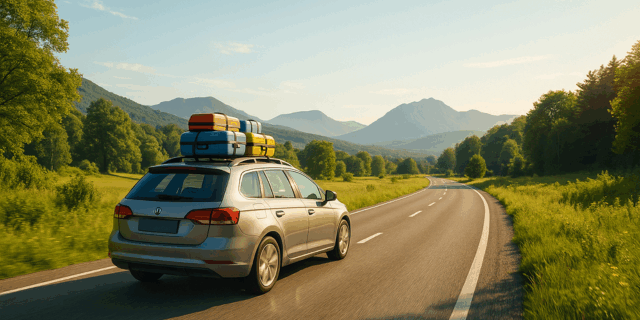
Tips for your road trip this summer holiday in Spain
Summer is here, and with it comes a significant increase in road travel. In fact, July and August are the months with the most long-distance journeys, but short-distance trips on secondary roads also rise sharply.
It’s also common to see more caravans and motorhomes on the roads during this time.
Therefore, it’s a period when extra attention and caution are necessary to ensure a safe trip. Here are some tips to keep in mind before and during your journey.
Best times to travel
Days and hours
It’s important to know which days and times see the most traffic to plan your trip for the best moment.
Generally, Fridays are the busiest days, especially between 3:00 p.m. and 11:00 p.m., while Tuesdays are the quietest. Saturday mornings and Sunday afternoons also experience heavy traffic. So, weekends are the least ideal times to start a journey, especially at the beginning or end.
Within the month, mid-month changes are peak travel times—particularly August 15th, which is a public holiday and the time of local festivities in many towns, attracting large crowds.
High-Traffic Areas
Traffic issues usually occur at exits from major cities and on routes heading to the coast—especially in summer. Therefore, roads in the Region of Murcia, Andalusia, Valencia, Madrid, and Castilla-La Mancha are among the most affected.
Tips and recommendations for safe driving
At the wheel
On the road, it’s essential to respect the speed limits and maintain a safe distance from the vehicle in front.
While driving, it’s crucial not to use your phone—one of the most common distractions and a leading cause of accidents.
You should also never consume alcohol before driving. Besides the risk to your life and others, it carries fines of up to €1000, and if your breath alcohol level exceeds 0.60 mg/l, it could even lead to imprisonment.
Safety equipment like seat belts for adults and child car seats must be in perfect condition and properly fastened.
Breaks during the journey are also important. It’s recommended to stop and rest every two hours of driving.
Plan your route and breaks
To choose the most efficient route and avoid wasting time, plan your trip in advance. This helps avoid roadworks and unwanted detours.
Just like the route, rest stops should also be planned. As mentioned, it’s advisable to stop every two hours to stretch, hydrate, and keep driving in optimal condition.
If possible, avoid traveling right after meals, as this can cause drowsiness and reduce alertness—a serious risk when driving.
Space for luggage
It’s crucial to place large suitcases in the car’s trunk. Before your trip, remove anything unnecessary from the trunk to free up space.
Heavier items should be placed low and in the center to keep the vehicle’s center of gravity stable and should be secured to prevent shifting during the trip.
A rarely mentioned but important tip is to fasten the rear seat belts even if no one is sitting there. This prevents luggage from being thrown forward in the event of a crash.
Carry up-to-date documents, including insurance and Spain MOT
Make sure you have all vehicle documentation in order before setting off. Check in advance that your insurance is valid and that your MOT (vehicle inspection) is up to date.
If your MOT has expired, your insurance may not cover any incidents—another reason to keep everything in order.
Essential items to keep in the car: vest and warning triangles
If your vehicle breaks down and you need to stop on the shoulder, it’s mandatory to wear a reflective vest and place the warning triangles or the V-16 emergency light to alert other drivers.
A simple check before departure can save you a lot of trouble.
Spare keys
If you’re going to be far from home for an extended period, it’s a good idea to carry a spare set of car keys and keep them in a different place. This will save you a major headache if you lose your keys while away from home.
Proper footwear and clothing
Wearing the right clothes and shoes while driving is very important—especially on long trips. Choose light clothing that doesn’t restrict your arm and leg movements.
Wear comfortable shoes that allow proper pedal control. Avoid driving in flip-flops or high heels.
Secure your pets properly
For their safety and yours, if you’re traveling with your pet, make sure they are properly secured—whether in a carrier, with a harness, seat belt, etc. There are many safe options available.
It’s also recommended to keep pets away from the driver to prevent distractions.
Maintain a comfortable temperature
Neither too hot nor too cold: the ideal temperature inside the vehicle is between 21°C and 23°C. Above 23°C, your ability to react and perceive signs decreases. At over 35°C, drivers can show symptoms similar to driving with a 0.5mg blood alcohol level.
Excess heat can also cause drowsiness while driving.
Vision: the most important factor
90% of road information is perceived through sight. There are many elements on the road that require your attention, and good vision is key. If you wear glasses, make sure they are properly adjusted.
If you’re going on a trip, bring a spare pair in case yours break or get lost.
Sunglasses are also helpful to reduce glare and prevent fatigue from prolonged sun exposure.
Safety is essential when hitting the road—especially during busy travel seasons. By following these tips and obeying traffic laws, you’ll be more likely to enjoy a calm, incident-free summer holiday.